
A GSM phone system for companies that want control over calls, teams and customer service

See how much calls made outside your CRM are costing you.

Velmanta’s ROI Calculator helps estimate lost sales opportunities and shows where you can recover revenue.

centralka

Your company phone should not operate outside your organization’s control

In many companies, the most important arrangements with customers still happen over the phone - but the history of those conversations remains on an employee’s phone, in private notes, or disappears when that person leaves the company.


Call → History → Recording → KPI → Manager Decision


Example use cases for the GSM phone system: 

  • preserving the history of telephone communication,
  • monitoring team activity,
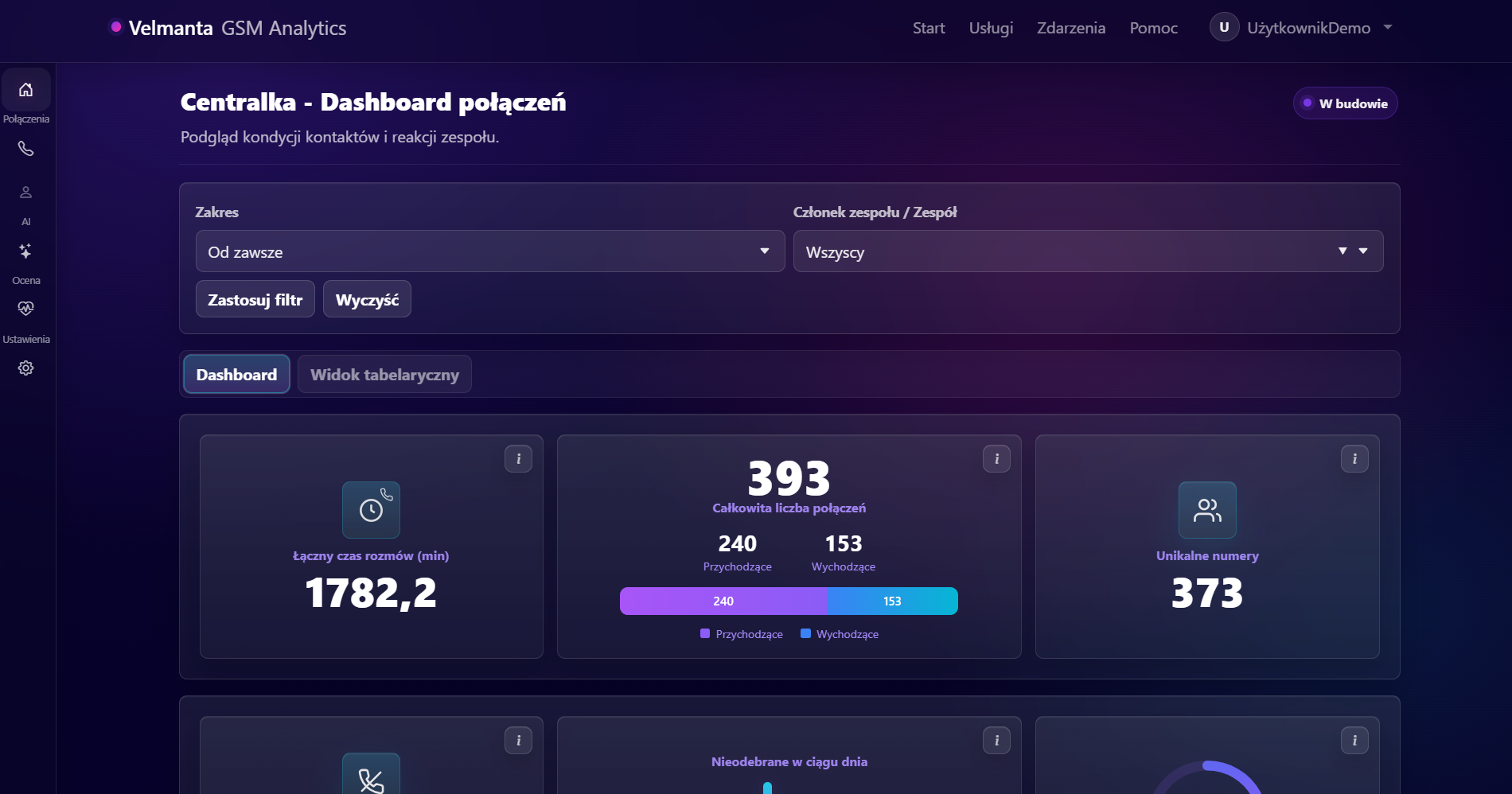
  • giving managers access to data that was previously invisible,
  • recording calls and providing easy access to transcripts,
  • AI analysis - recommending calls worth reviewing or helping monitor adherence to sales and service scripts,
  • monitoring missed calls and calls that were never returned - with a direct impact on conversion.

ChatGPT Image 16 lip 2026, 14_53_57

 Manual call logging in your CRM will become a thing of the past 

Manually registering calls in a CRM is time-consuming for your team and results in significant loss of data and information. 

Popular VoIP solutions available on the market can solve this problem, but they also come with a number of disadvantages that traditional GSM does not have. 


Call → CRM → Recording → KPI → Manager Decision 


GKey benefits of CRM integration: 

  • complete data from an important customer communication channel stored directly in the CRM,
  • real-time reporting of team activity,
  • a management tool providing access to data, recordings, transcripts and AI recommendations,
  • automations triggered by registered calls,
  • AI analysis - recommending calls worth reviewing or helping monitor adherence to scripts,
  • monitoring missed calls and calls that were never returned - with a direct impact on conversion,
  • sentiment, keyword and product reporting,
  • the ability to evaluate individual team members based on real data.

Why choose Velmanta’s GSM phone system?Why choose Velmanta’s GSM phone system?

history

Team performance control

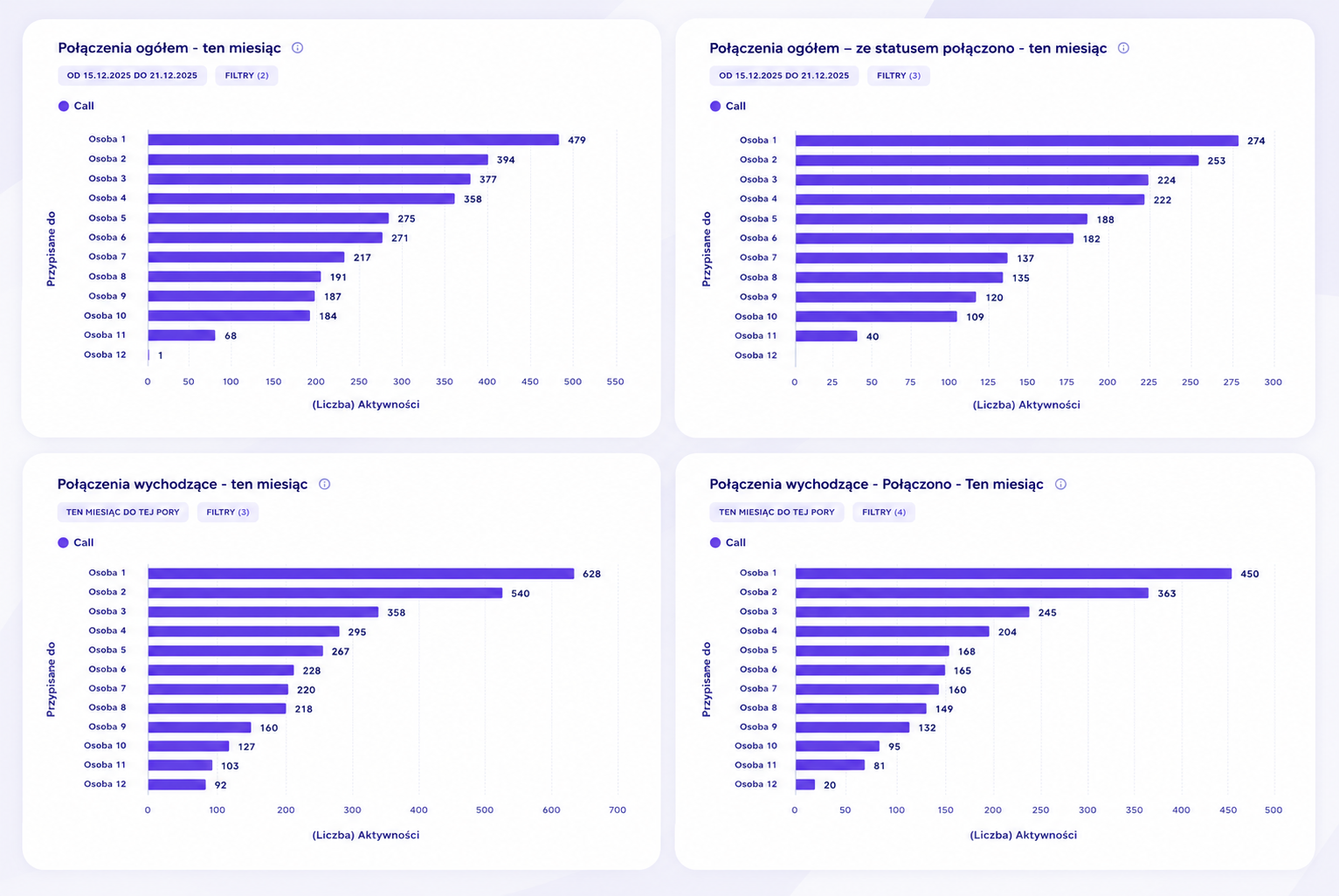
See who is making calls, who is answering them, how many contacts remain without follow-up and which conversations require a manager’s attention.

This is especially important for sales teams, customer service, reception teams and field employees.

person

Complete contact history

Incoming and outgoing calls can be stored together with essential data, recordings and conversation context.

This allows your team to see what was previously agreed and continue serving the customer more quickly.

workflow

Less manual work

Your team no longer needs to manually report every conversation or re-enter data after contacting a customer.

The system organizes telephone activity and reduces the amount of time spent on administration.

What can you do with a GSM phone system?

telephone

Incoming call management

Route calls to the right people, departments or queues.

Organize the work of reception teams, sales, customer service and field teams.

telephone2

Outgoing calls from company numbers

 Keep customer communication on company phone numbers instead of relying on scattered or private employee phone numbers. 

time

Call history and recordings

 Store the history of telephone communication so managers and salespeople can return to previous arrangements, review service quality and prepare follow-ups faster. 

kpi

GSM communication KPIs

Measure answer rates, team activity, number of calls, contact effectiveness, conversations that end without a clear outcome and recurring customer issues.

Velmanta focuses on exactly these areas as key management indicators: the volume, quality and context of conversations.

headset

AI support and call analysis

Extend your GSM phone system with analysis of customer intent, risks, frustration, sales opportunities and conversations that ended without a clear next step.

Managers no longer need to listen to every call - instead, they receive a prioritized list of conversations worth reviewing.

link

Integrations and further development

 Start by gaining visibility into communication and KPIs, then expand the system with AI, alerts, CRM integrations or other tools used across your company. 

What does the implementation process look like?

Step 1

analysis

Communication Audit

We review how telephone communication currently works within your company: phone numbers, departments, users, service processes, call routing and the most important challenges.

Step 2

settings

Phone System Configuration

We configure phone numbers, IVR, queues, call routing, users and the overall call structure to match the way your team works.

Step 3

inbox

Dashboard & Call History

We enable access to call history, recordings, user activity and key operational data. 

Step 4

chart

KPIs & Reporting

We configure metrics that show your team’s actual activity: answer rates, follow-ups, number of contacts, conversations without a clear outcome and areas that require attention. 

Step 5

notification

AI, Alerts & Integrations

We expand the system with call analysis, intent classification, manager alerts, CRM integrations and automations tailored to your company’s processes. 

More control, less operational chaos

Faster customer contact

Your team has access to the full contact history and can quickly reconstruct the context of previous conversations. 

Better customer service and follow-up

Managers can see which conversations ended without clear arrangements, which require a callback and where a customer may not be receiving the right level of attention. 

Full visibility into team activity

You no longer have to rely on declarations, manual reports or impressions.

You can see the actual telephone activity taking place across your company.

Fewer lost leads

It becomes easier to identify missed calls, missing callbacks and sales opportunities that require an immediate response.

Better support for managers

The system shows where your company is losing time, customers and money - without requiring managers to manually analyze every conversation. 

Implementation without disruption

Start by centralizing calls, history, recordings and KPIs.

The system can later be expanded with AI, integrations and advanced reporting.